
How to Check for a Warrant in Jefferson Davis County
There is no official Jefferson Davis County online warrant search. The county website does not publish an active warrant list, and neither the Prentiss Police Department nor the municipal court runs a public warrant-lookup portal. That means a real warrant check happens by phone or in person with the office that issued the order.
The right office depends on the case. Sheriff Ron Strickland keeps the peace in the county and serves as the county jailor, so the Sheriff's Office at 601-792-5169 is the first call for arrest-warrant and active-custody questions. Justice Court at 601-792-5129 handles county traffic tickets, DUIs, misdemeanors, and felony initial appearances, and it is the likely source of a bench warrant after a missed court date. Matters that began inside the city of Prentiss route to Prentiss Municipal Court at 601-792-5196.
Felony warrants follow the felony case. After indictment, a felony moves to the 15th Circuit Court, so capias and bench-warrant questions on a felony go to the Circuit Clerk at 601-792-4231. Contempt, support, and other family-equity warrants live in Chancery Court, reachable through the Chancery Clerk at 601-792-4204. Calling the correct court saves a wasted trip to the courthouse.
Warrant Search Channels by Office
Because no single database covers every warrant in the county, the practical method is to match the type of case to the office that holds the record. The table below lays out each channel, the phone line, and the kinds of warrants that office is most likely to have on file. Always call before going to any counter, since the county lists post office boxes for several offices while the courts sit at separate physical addresses.
| Office | Phone | Warrants It Handles |
|---|---|---|
| Sheriff's Office | 601-792-5169 | Active arrest warrants, custody holds, jail docket |
| Justice Court | 601-792-5129 | County traffic, DUI, misdemeanor, failure-to-appear bench warrants |
| Prentiss Municipal Court | 601-792-5196 | City traffic, ordinance, and city misdemeanor warrants |
| Circuit Clerk | 601-792-4231 | Felony capias, Circuit Court bench warrants, bond violations |
| Chancery Clerk | 601-792-4204 | Contempt, support, and family-equity capias |
The Town of Prentiss explains how to ask for municipal police and court records on its open records page, which sets out who can request city records and how those requests are received. Reviewing that page before you call helps you frame a city warrant question in the terms the clerk expects.
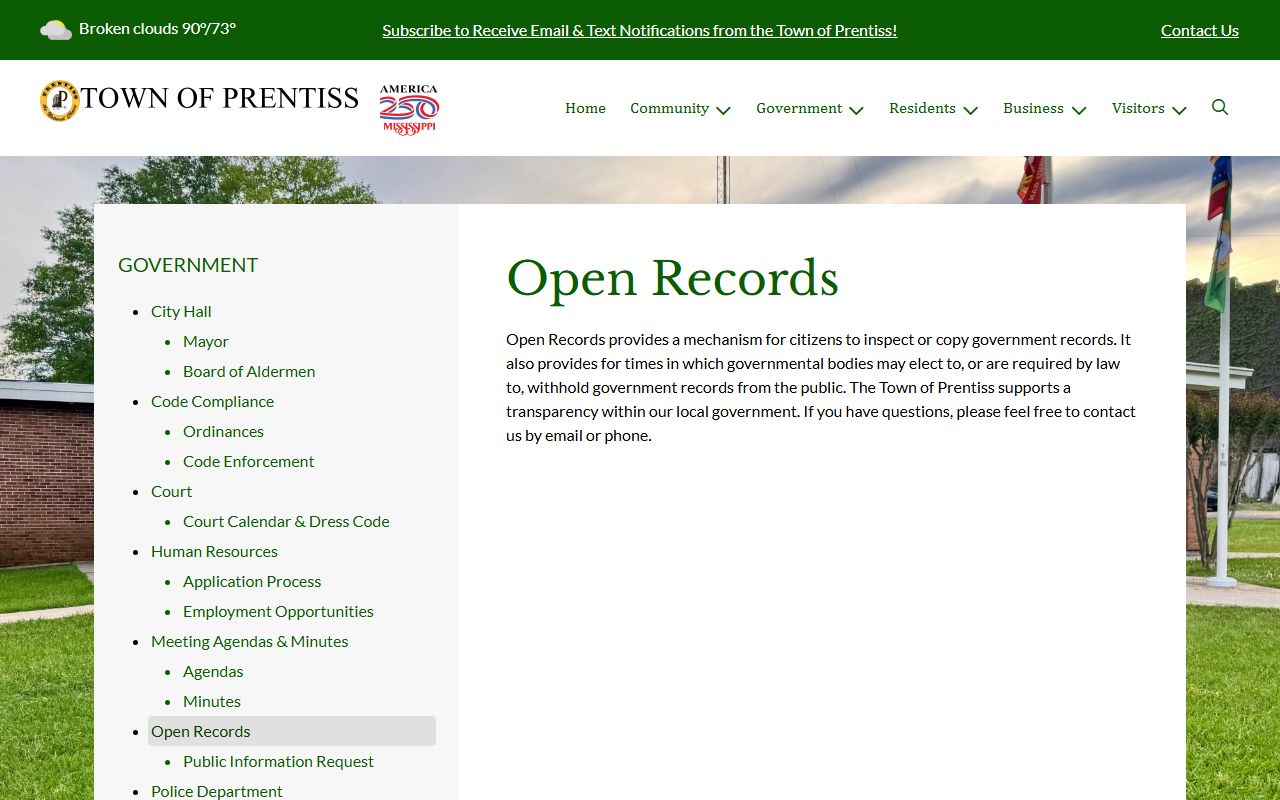
City-issued warrants, citations, and police reports are municipal records, so they follow the Town of Prentiss process rather than the county sheriff's. A warrant tied to a Prentiss city ticket will not appear in a Justice Court or Circuit Court inquiry, which is why the municipal channel stays separate.
Types of Warrants in Jefferson Davis County
Not every warrant means the same thing. Some authorize an arrest on a new charge, while others enforce a court order or push a stalled case forward. The categories below cover the warrants that surface most often in county and municipal cases.
- Arrest warrant - a court order authorizing law enforcement to take a person into custody based on probable cause.
- Bench warrant - a warrant a judge issues directly, usually for a missed court date or contempt.
- Capias - a court process directing custody or appearance, shown in Mississippi court systems as a "Capias Pending" flag.
- Search warrant - an order allowing a search, generally not public while active and often sealed during an investigation.
- Fugitive or out-of-county warrant - a hold for another agency that may appear in custody records when a person is booked.
- Civil contempt warrant - an order that can arise in Chancery or Justice Court when a person ignores a court directive.
Warrant flags also appear inside court dockets. The full criminal file that follows an arrest is covered in the Jefferson Davis County criminal court records, where charges, bond entries, and dispositions sit alongside any warrant or capias status.
Checking Court Docket Flags Through MEC
Circuit and Chancery cases in Jefferson Davis County are filed through Mississippi Electronic Courts, the statewide electronic case system. Public access runs through PAMEC, the public side of that system, which requires a free account and login. PAMEC is not a warrant-search tool, but warrant activity shows up there as a docket flag. The Chancery court information page lists status flags such as Bench Warrant Issued, Bench Warrant Returned, and Capias Pending, which proves warrant events are tracked in the record even though no public warrant list exists.
The login itself is simple, and the field layout is shown below. A PAMEC account lets a registered user open a Circuit or Chancery case and read the docket entries, including any warrant or capias flag attached to that case.
| Field Label | Type | Required | Notes |
|---|---|---|---|
| Username | Text | Yes | Maximum length 12 characters |
| Password | Password | Yes | Maximum length 32 characters |
| Enter | Submit button | Yes | Submits the login |
| New Registration | Link | No | Opens the free account sign-up |
Reading a docket flag is not the same as confirming a live warrant. A flag can be entered, returned, or recalled, so anyone who sees a warrant or capias notation should confirm its current status with the clerk of the court that issued it before drawing a conclusion.
What a Jefferson Davis County Warrant Record Shows
Because the county publishes no public warrant sample, the safest description of a warrant record is built from the fields a clerk or deputy can confirm by phone or in person. These are the basic items tied to an arrest or bench warrant, and they help a caller verify whether an order is real and what it requires.
| Field | What It Shows |
|---|---|
| Name | The person the warrant names as its subject |
| Issuing Court | Whether the warrant came from Justice, Municipal, Circuit, or Chancery Court |
| Case Number | The case the warrant is connected to |
| Charge or Reason | The offense or the act, such as failure to appear, behind the warrant |
| Warrant Type | Arrest, bench, capias, or other classification |
| Date Issued | When the court signed the order |
| Bond Amount | The bond figure if one has been set |
| Resolution Instructions | What the court says a person must do to clear it |
Do not expect mugshots, full criminal histories, or downloadable warrant images from a phone call. A clerk or deputy can usually confirm whether a warrant exists and explain the next step, but anything more detailed may require a written request or a court appearance.
The Town of Prentiss accepts written requests for municipal records through its public information request process, which lists the ways a request can be hand-delivered, mailed, emailed, or faxed. For a city warrant or police record, that written route is the formal path when a phone call is not enough.
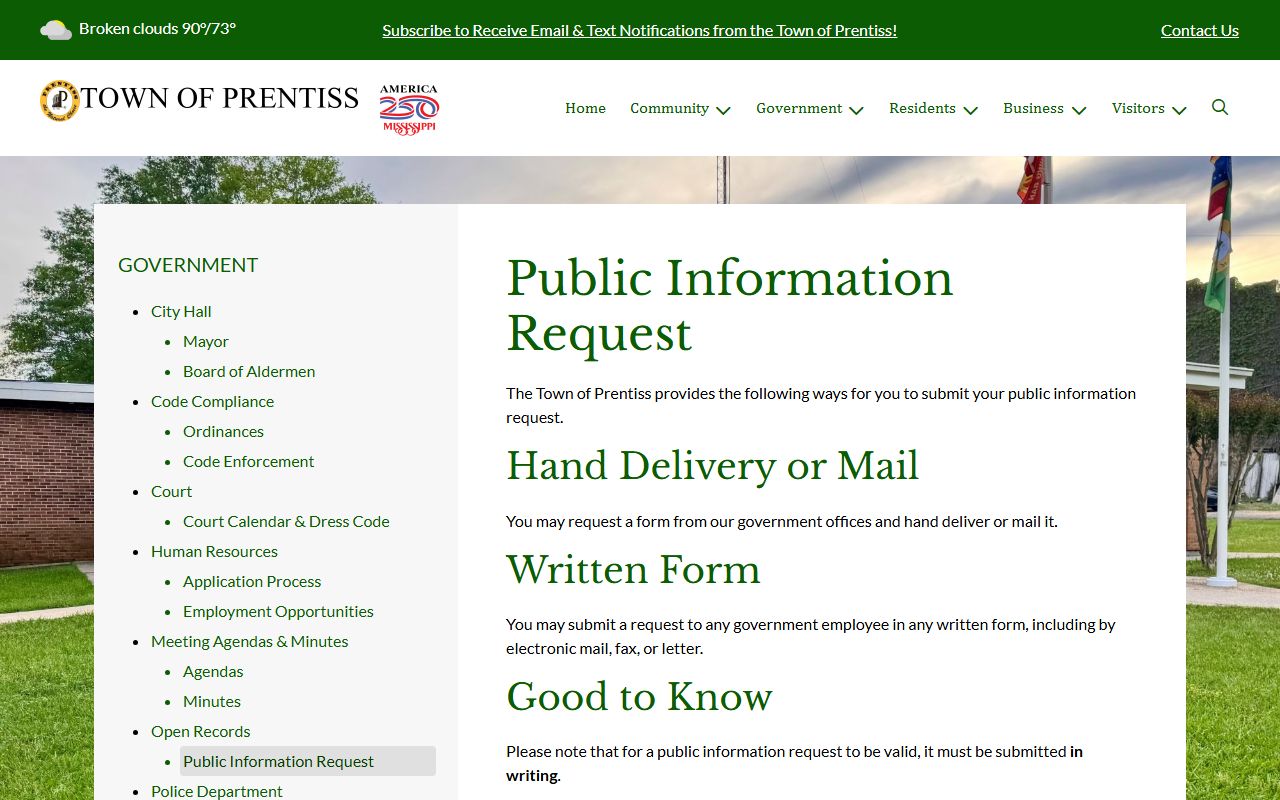
A written request creates a paper trail and a point of contact, which helps when a warrant question crosses between the police department and the municipal court. Even so, law-enforcement exemptions can limit what the city releases about an active warrant or an open investigation.
How to Resolve an Outstanding Warrant
An outstanding warrant does not disappear with time, and ignoring it usually makes the situation worse. The steps below outline a practical way to handle one in Jefferson Davis County, working through the right office rather than an unofficial search site.
- Avoid third-party warrant sites and confirm the warrant only through the issuing court or the Sheriff's Office.
- Identify the likely court: Justice Court for county traffic, DUI, or misdemeanor matters; Prentiss Municipal Court for a city ticket or ordinance; Circuit Court for a felony; Chancery Court for contempt or family-equity issues.
- Call the court or the sheriff before you appear so you know what to expect.
- Ask whether bond has been set, whether a court appearance is required, and which payment methods the office accepts.
- If you have a lawyer, have the attorney contact the clerk or court on your behalf.
- After the matter is handled, confirm that the warrant or capias status has been updated in both the court and law-enforcement records.
Important: Talk to a lawyer before you turn yourself in, since an attorney can often arrange bond, a court date, or a surrender on terms that protect your rights.
The Prentiss Police Department page is the municipal law-enforcement contact point for city matters and can direct a caller toward the right court or records channel. Local detail matters here, and a quick call to the correct office often clears up whether a warrant is active and how to address it.
Resolving a city warrant may involve both the police department and the municipal court, which meets in the City Hall boardroom on the third Wednesday of each month. Knowing that schedule ahead of time helps a person plan a surrender or a payment around the limited court calendar.
Restricted and Sealed Warrant Records
Not every warrant is open to the public. Under Mississippi's Public Records Act, records are generally available for inspection, but several exceptions apply directly to warrants. A search warrant is often sealed while an investigation is active, and details may stay protected until the matter is resolved in court.
Other categories carry their own confidentiality. Youth Court warrants and juvenile matters are restricted by law, so juvenile names are not searched publicly. Sealed or expunged criminal cases are also shielded, and a person whose record was cleared under Mississippi's expungement statute should not appear in a public warrant inquiry the way an open case would. Ongoing investigations and law-enforcement exemptions can limit what any office releases.
Note: When an office declines to release warrant detail, ask whether the limit comes from a sealing order, a juvenile statute, or an active investigation, since each has a different path forward.