
Jefferson Davis County Arrest Records and Court Charges
An arrest record is the account of the arrest itself: who was taken into custody, who made the arrest, and the booking that followed at the county jail. In Jefferson Davis County the Sheriff, Ron Strickland, serves as the county jailor and keeps the jail docket. That docket is the booking side of the story. It is not the same as the formal charges, and the county does not publish an online mugshot or booking database. For current custody and booking detail, the jail roster path runs through the Jefferson Davis County inmate records channels.
The court charge record begins after the arrest, once a prosecutor decides what to file. For felonies, District Attorney Hal Kittrell of the 15th Circuit reviews the case and brings charges that the court clerk then enters into the case file. Misdemeanors are handled by the county prosecutor, John Allen Buffington, and the lower courts. From that point the charges after arrest are tracked through the case, with each amendment, reduction, or dismissal recorded. The full case file and final outcome are covered in the Jefferson Davis County criminal court records overview.
Local reporting also documents the county offices that hold these records. The Prentiss Headlight covered the December 2025 appointment of the county Chancery Clerk in this county board report.
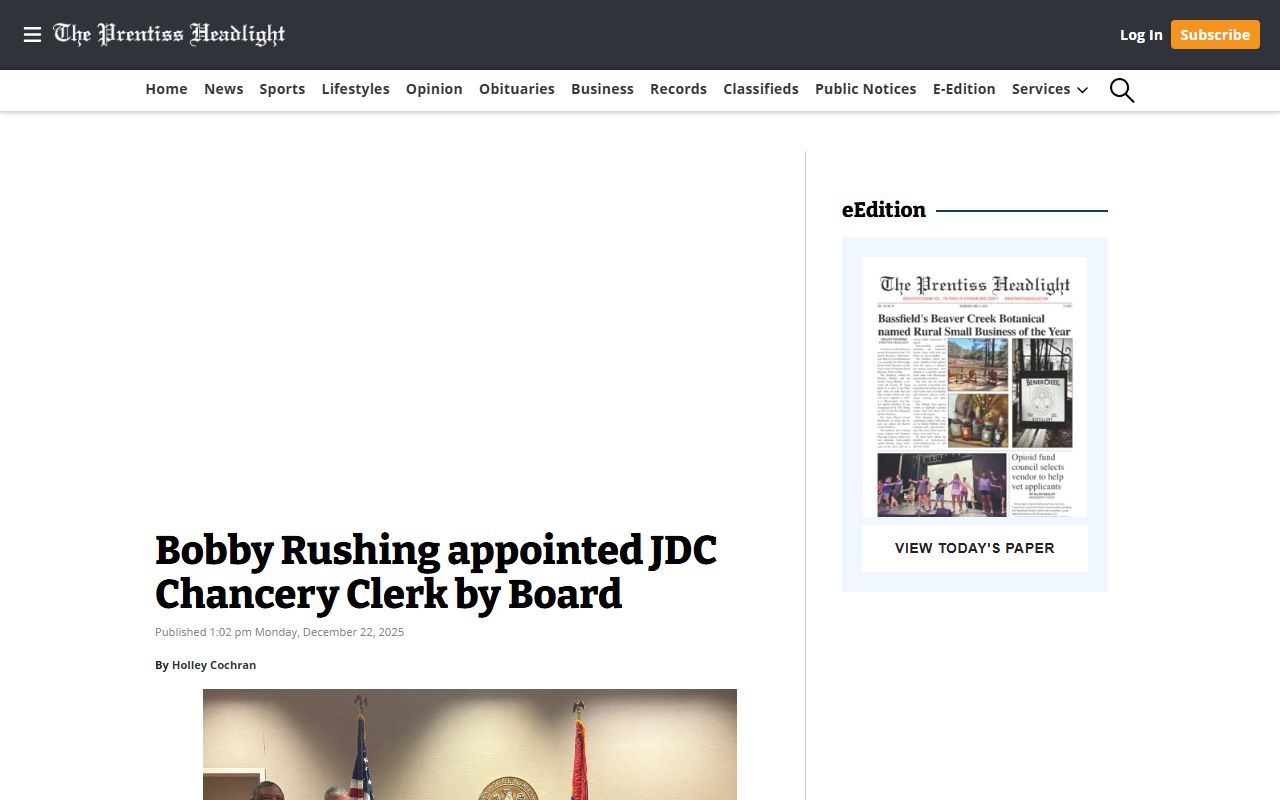
Felony charge files sit with the Circuit Clerk rather than the Chancery Clerk, but the report shows how the county's record-keeping offices are publicly named and tracked.
How to Find Jefferson Davis County Arrest Records and Charges
Charges and their current status show up in the court case file, not the arrest log. Circuit and Chancery cases run through Mississippi Electronic Courts, reached by the public through PAMEC with a free account and login. The booking detail behind an arrest lives instead with the sheriff and the jail docket, which is reached by phone or in person rather than an online roster. The two sources answer different questions, so a full search usually touches both.
- Open a Public Access to Mississippi Electronic Courts account to reach Circuit Court case files.
- Search by the defendant's name or by the case number if you have it.
- Open the case and read the list of charges filed against the defendant.
- Check each charge's statute code, severity level, and current status.
When a case is not online, call the office that holds it. Reach the Circuit Clerk at 601-792-4231 for felony charge files, Justice Court at 601-792-5129 for misdemeanor and initial-appearance matters, and Prentiss Municipal Court through Town Hall at 601-792-5196 for city charges. For booking and custody status, the Sheriff's Office at 601-792-5169 confirms what the jail docket shows.
How Charges Get Filed After an Arrest: Complaint, Information, and Indictment
The path from arrest to charge follows set steps. After booking, a felony arrestee in Jefferson Davis County gets an initial appearance and a sworn affidavit in Justice Court, where judges hold jail sessions three times each week to meet the three-day deadline after arrest. The charge record itself opens when the prosecutor files a charging document. Three main types do that work, and which one is used depends on the severity of the offense.
| Complaint | Information | Indictment | |
|---|---|---|---|
| Filed By | Officer / Prosecutor | Prosecutor | Grand Jury |
| Common For | Misdemeanors | Many felonies | Serious felonies |
| Starts | The case | The case | The case |
In Mississippi, most felonies reach the Circuit Court by indictment, the charging document a grand jury returns. An affidavit or complaint often opens a misdemeanor in Justice or Municipal Court. A first-time, non-violent defendant may also be routed to the 15th Circuit District Attorney's Pretrial Diversion Program, an alternative to prosecution that lets a qualifying person complete conditions and avoid a conviction. The charges still appear in the file even when diversion is offered.
Charge Status and What It Means
Charges rarely stay frozen. As a case moves, a charge can be amended, reduced, added, dropped, or dismissed. The case file records each change with its date, so the status shown today may differ from the charge first filed after the arrest. Reading the status for each separate count is the only way to know where a case truly stands. The terms below appear often in Mississippi charge records.
| Status | What It Means |
|---|---|
| Pending | The charge is filed and active, with the case still moving through the court. |
| Amended / Reduced | The charge was changed, often to a lesser offense, after review or negotiation. |
| Dismissed | The court ended the charge, so it no longer moves toward trial or sentencing. |
| Nolle Prosequi | The prosecutor chose not to pursue the charge, dropping it from the case. |
Court systems also flag charge-related events on the docket. The 13th Chancery District court information page, for example, lists flags such as a bench warrant issued, a capias pending, and pretrial intervention pending. Those flags show how a charge or a related order is moving, even when no separate public charge list exists.
Arrest Records, Charges, and Convictions Compared
Being arrested, being charged, and being convicted are three different things, and arrest records can carry all three at once. An arrest reflects probable cause to take a person into custody. A charge is the formal accusation a prosecutor files. A conviction is the finding of guilt that may follow a plea or trial. Many files show charges that were later dropped, dismissed, or reduced, which is why no single line tells the whole story.
| Charge | Conviction | |
|---|---|---|
| Stage | Accusation | Verdict or plea |
| Burden of Proof | Probable cause | Beyond reasonable doubt |
| Public Record | Yes | Yes |
An arrest record that lists a charge does not prove guilt. The disposition for each count, found in the court case file, is what shows whether a charge ended in a conviction, a dismissal, or a diversion outcome.
Sealed vs. Expunged Records
Some charge records can be closed to the public. Mississippi law allows certain cases to be sealed or expunged, and the difference matters. A sealed record stays out of public view but exists for limited official use. An expunged record is treated as if it never happened. Section 99-19-71 of the Mississippi Code is the core expungement statute, and it sets which dismissed charges, misdemeanors, and qualifying felonies can come off the public file.
| Sealed | Expunged | |
|---|---|---|
| Visibility | Hidden from public | Destroyed / treated as never existed |
| Law Enforcement | Limited access | Very limited |
| Eligibility | By statute or court order under Mississippi law | Qualifying dismissals, misdemeanors, and limited felonies under Section 99-19-71 |
An expungement is filed in the court that handled the charge. A Jefferson Davis County expungement form and fee were not published in county sources, so the right step is to call the Circuit Clerk, Justice Court, or Prentiss Municipal Court depending on where the charge sits.
Charge Codes and Severity Levels
Each charge in a Mississippi case ties to a statute, and that code sets the severity level. The main divisions are felony, misdemeanor, and lesser violations such as county ordinance or traffic offenses. Felonies carry the heaviest exposure and route to the 15th Circuit Court after indictment. Misdemeanors stay in Justice Court or Prentiss Municipal Court. A single arrest can produce several separate charges, each with its own code and level.
Reading the code matters because it controls where the case is heard and how serious the exposure is. A traffic stop by the sheriff or the Mississippi Highway Patrol may yield a county ticket in Justice Court, while the same stop could add a felony count that lifts the case to Circuit Court. The case file lists every count, so the number of charges and their levels should be read together rather than judged by the most serious line alone.
Statewide Charge and Criminal History Lookups
Local charges can roll up into statewide records, but Mississippi does not offer an open public self-service search of a person's full criminal history. A name-based history is held by state law-enforcement agencies and is released under their own rules, not through the county clerk. The Department of Public Safety explains how its record requests route, including driver records and crash reports, on its public records FAQ.
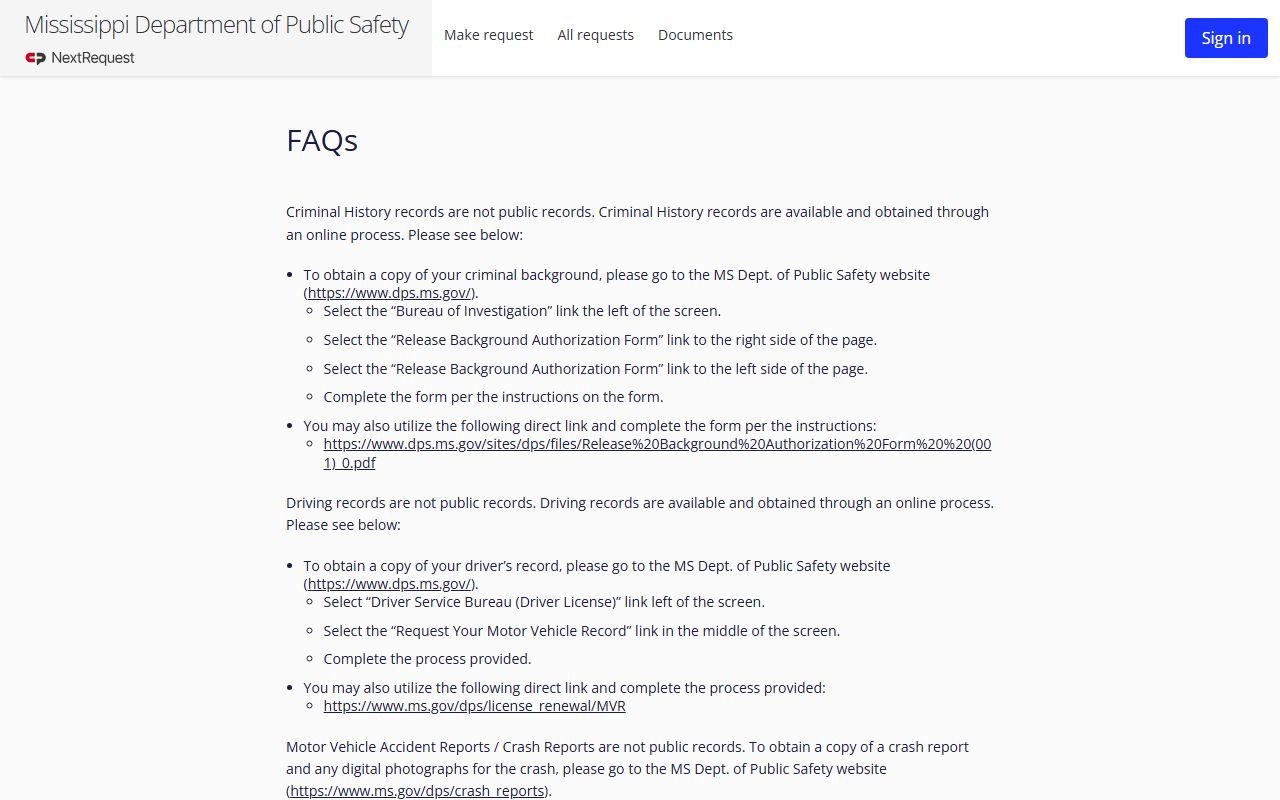
The FAQ makes clear that DPS routes different record types to different channels, which keeps a charge file separate from a driver file. The state driver record is its own document, kept by the Driver Service Bureau, and it is not a criminal charge record. That distinction is laid out on the Mississippi Driver Records home page.
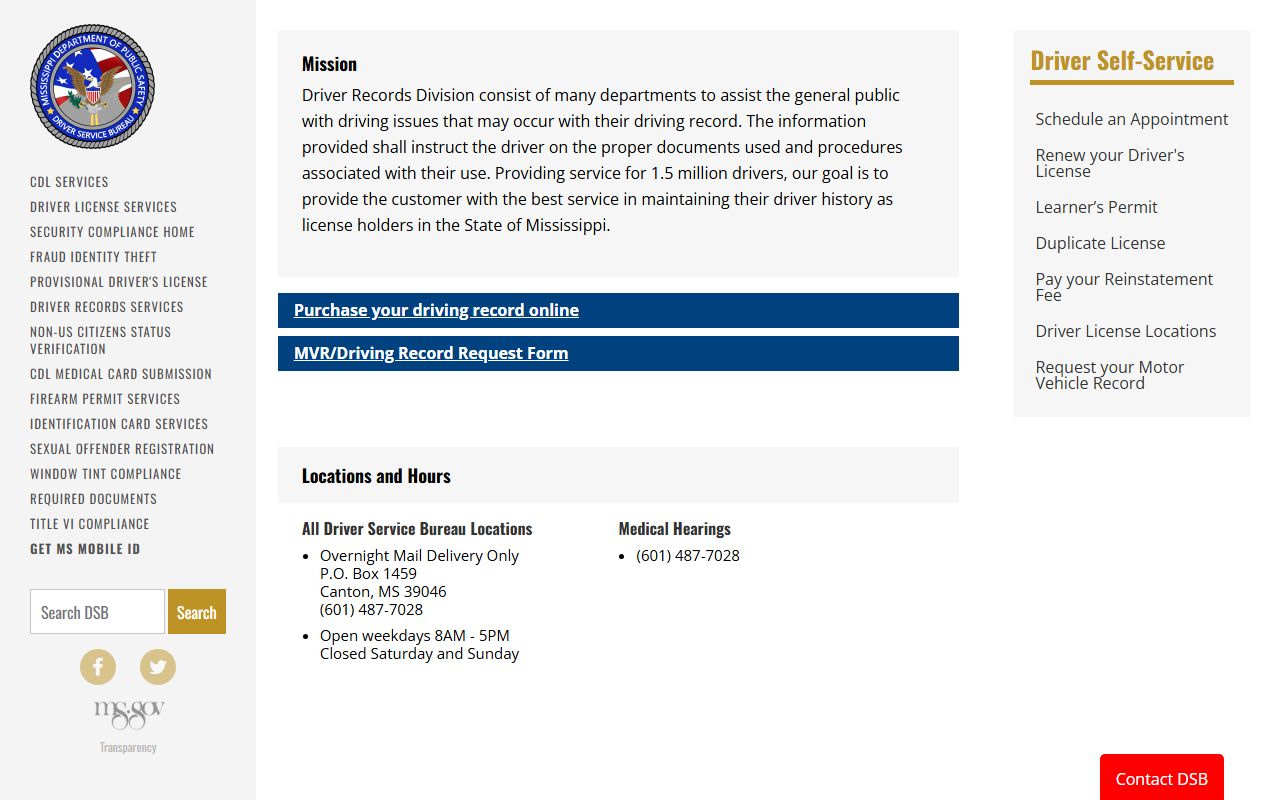
A certified driver record can be bought online from the state, but it reflects license and driving history rather than the criminal charges filed after an arrest. For charges, the court case file remains the authoritative source.
Background Check Considerations
A quick charge lookup and a formal background check are not the same. Reading one case from PAMEC or a clerk's counter answers a narrow question. A background check used to decide on a job, a rental, credit, or insurance falls under the federal Fair Credit Reporting Act and must run through a regulated consumer reporting agency. Arrest and charge entries can be incomplete or out of date, so any record used for a serious decision should be verified with the office that holds it.
Important: This site is not a consumer reporting agency under the Fair Credit Reporting Act, and its information cannot be used for credit, employment, tenant, or insurance screening.
Restricted Charge Records in Jefferson Davis County
Some charge records stay closed no matter how a search is run. Youth Court matters for juveniles are confidential and are not searchable by name. Sealed and expunged charges drop out of public view by law or court order. Charges tied to an ongoing investigation, sealed warrants, and personal identifiers such as Social Security and financial account numbers are withheld or redacted from public files.
When a charge cannot be found, it may be sealed, expunged, juvenile, or held only in older paper files. A missing result does not always mean nothing was filed. The fastest way to confirm a charge record's status is to call the clerk for the court that handled it, since the same offices that release open files also know which records the law keeps private.